
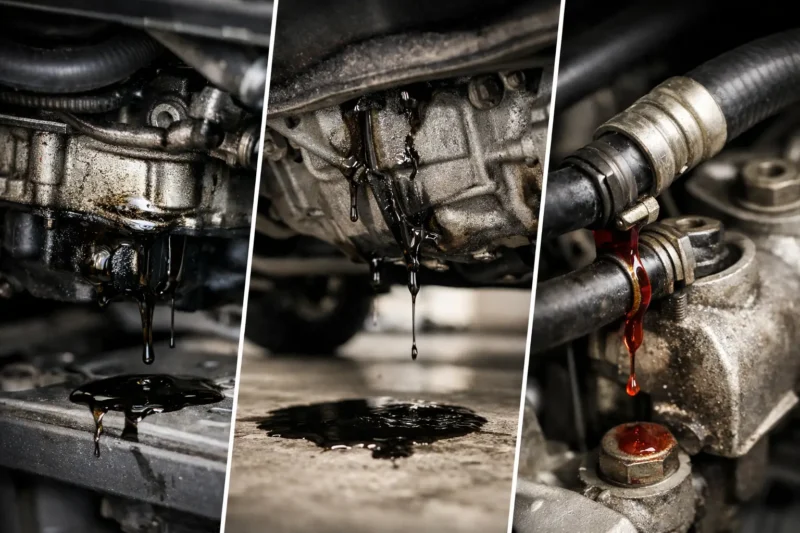
A fresh puddle under your vehicle can turn an ordinary morning into a worry, particularly when you are due at work, heading up the coast or relying on your ute for the job. Oil leaks from engine, transmission and power steering systems should not be ignored, but they do not all carry the same level of urgency. The colour, location and rate of the leak can help determine whether you can safely drive to a workshop or should stop and arrange assistance.
The most useful first step is not guessing which seal has failed. It is checking the fluid level, looking for warning lights and getting the source identified properly. Oil can travel along engine components and undertrays, so the drip on the driveway is not always directly beneath the fault.
First, work out whether it is actually oil
Not every fluid beneath a vehicle is engine oil. Air-conditioning condensation is clear water and usually harmless, while coolant may be green, red, blue or pink and needs attention because an overheating engine can cause serious damage. Brake fluid is generally clear to amber, feels slippery and requires immediate inspection if the level is low or the brake pedal feels different.
Engine oil is usually amber when fresh and brown to black when used. Automatic transmission fluid can be red, pink, brown or dark, depending on its age and type. Power steering fluid may be red, amber or clear. Modern vehicles can also use specialised hydraulic fluids, so colour alone cannot confirm the system.
Place clean cardboard under the parked vehicle overnight, then note where the drops appear. A leak near the front centre may point to the engine, while fluid around the gearbox area can suggest a transmission leak. Fluid around the front wheels, steering rack or power steering pump is another clue. Do not crawl underneath a vehicle supported only by a jack.
What to do when engine oil is leaking
Engine oil keeps internal moving parts lubricated and helps control heat. If the oil level falls too far, expensive engine damage can occur quickly. Check the dipstick on level ground after the engine has been switched off for a few minutes, following the instructions in your owner’s handbook.
If the oil is below the minimum mark, top it up with the correct grade before driving anywhere. Adding oil is a short-term safeguard, not a repair. Avoid overfilling, as too much oil can create its own problems.
Common engine oil leak sources include the rocker cover gasket, oil filter seal, sump plug or washer, sump gasket, timing cover, oil cooler lines and crankshaft seals. Sometimes an oil filter has been fitted incorrectly or a drain plug washer has not sealed after a service. Those faults are often straightforward to rectify when caught early. Leaks from rear main seals or timing covers can involve more labour because of component access.
Do not keep driving if the oil pressure warning light comes on, the engine becomes noisy, there is a burning-oil smell with smoke from the bonnet, or oil is pouring out rather than leaving an occasional spot. Pull over safely, switch off the engine and organise professional help. An oil pressure light is not a reminder to book a service next week – it can mean the engine is already short of lubrication.
Transmission oil leaks need prompt attention
Automatic and manual transmissions rely on the correct fluid level and condition to operate properly. In an automatic, low fluid can lead to delayed engagement, slipping, shuddering, harsh shifts or overheating. In a manual, a leak can reduce lubrication for gears and bearings, creating noise and wear that may not be immediately obvious.
A transmission leak may come from the pan gasket, drain plug, cooler hoses, axle seals, selector shaft seal, transmission case or a damaged cooler line. On many automatic vehicles, checking fluid level is not as simple as using a dipstick. It may require the vehicle to be level, at a specific temperature and checked through a fill or overflow point. That is one reason it is best not to guess or add a universal transmission fluid.
If the vehicle struggles to select drive or reverse, slips under acceleration, makes unusual whining noises, or shows a transmission temperature warning, stop driving where safe. Continuing to drive can turn a hose or seal repair into a major transmission repair.
A small seep around a transmission case is not always an emergency, particularly if levels remain correct and there are no driving symptoms. It still deserves inspection. The difference between a harmless-looking seep and an active leak is not always visible without cleaning the area, checking the fluid level and inspecting the vehicle on a hoist.
Power steering leaks can quickly affect control
Vehicles with hydraulic power steering use fluid pressure to make steering lighter. A leak may show up as a puddle near the front of the vehicle, a groaning or whining sound when turning, heavier steering, or fluid around the power steering pump, reservoir, hoses or steering rack.
Check the reservoir level if your vehicle has one and use only the specified fluid. Some systems use automatic transmission fluid, while others require dedicated power steering or hydraulic fluid. Mixing the wrong product can damage seals and steering components.
If steering suddenly becomes heavy, do not assume it is safe to continue as normal. You may still be able to steer, but it will take more effort, especially at low speed. This can be a real safety issue in traffic, car parks and tight turns. A damaged hose can also spray fluid onto hot exhaust parts or other components.
Not all newer vehicles have power steering fluid. Many use electric power steering, so a steering problem in those vehicles has a different cause and needs a diagnostic assessment rather than a fluid top-up.
Oil leaks from engine, transmission and power steering: what to do now
Start by checking for warning lights, unusual noises, burning smells and changes in how the vehicle drives or steers. If any of these are present, or the leak is rapid, avoid driving and arrange assistance. If the vehicle feels normal and the relevant fluid is safely above minimum level, drive only as necessary to have it inspected.
Avoid relying on stop-leak additives. They can occasionally provide a temporary result on a minor seal seep, but they may also affect seals, valves and fluid performance. They are not a dependable substitute for finding the source of the leak, particularly in transmissions and steering systems.
Before your workshop visit, take a photo of the puddle and make a note of when it appeared, whether it happens after driving, and any warning lights or symptoms. This information can make fault-finding faster and more accurate. If you have recently had servicing or repairs completed, mention that as well.
A proper inspection generally involves cleaning the affected area, checking fluid levels and condition, inspecting hoses, seals and fittings, and running the vehicle to trace fresh fluid. In some cases, a UV dye may be used to pinpoint a slow or hidden leak. This approach avoids replacing parts based on guesswork.
Why early repairs usually cost less
A leaking gasket or hose is rarely the only risk. Oil on rubber bushes can shorten their life. Engine oil on a drive belt can cause slipping or belt damage. Fluid reaching exhaust components can create smoke and a fire risk. Transmission fluid loss can lead to internal wear, while steering fluid loss can damage the pump or rack.
The repair cost depends on the location of the leak and how far it has progressed. Replacing an accessible hose, filter seal or sump plug washer is very different from removing a transmission to access a major seal. Early diagnosis gives you more control over the repair and helps prevent a smaller issue becoming a breakdown.
For drivers around Noosa and the Sunshine Coast, AutoSavvy Mechanical can identify the source, explain the repair in plain language and provide transparent advice on what needs attention now and what can be monitored. The aim is to do the job right the first time and get you back on the road safely.
A clean driveway is nice, but the real priority is protecting your vehicle’s lubrication, steering and driveline systems. If you have seen fresh fluid under your car, take a moment to check the basics, then book an inspection before the next short trip becomes a costly one.
by Jeremy Bycroft
Share
Share
Leave A Comment
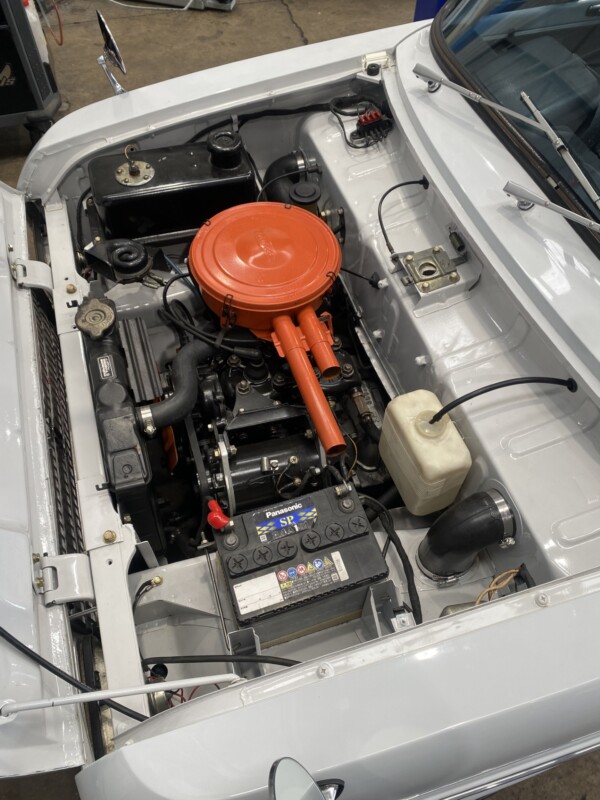
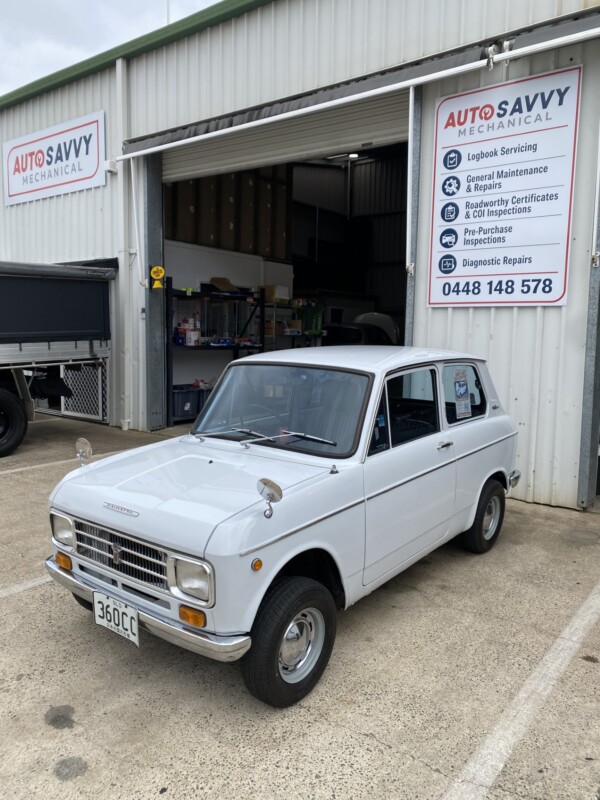
Take a step back in time with this rare 1960s Daihatsu Fellow. With its tiny 356cc two-stroke engine, four-speed manual gearbox and rear-wheel-drive layout, this remarkable little car is a wonderful example of simple engineering, careful ownership and the longevity of a well-maintained classic.
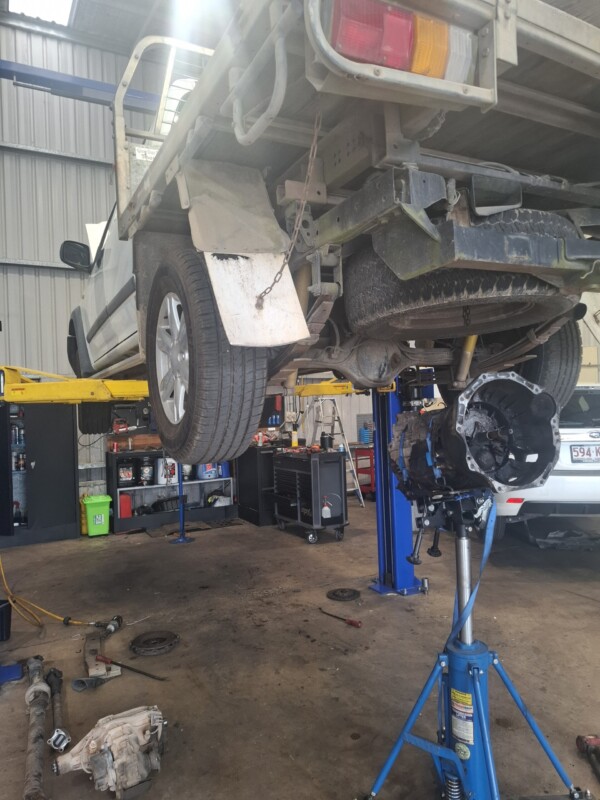
A 2010 Isuzu D-Max arrived at Autosavvy Mechanical with a failed clutch. After battling seized bolts and a bent pin, we removed the clutch, machined the flywheel and prepared the vehicle for its new clutch assembly.
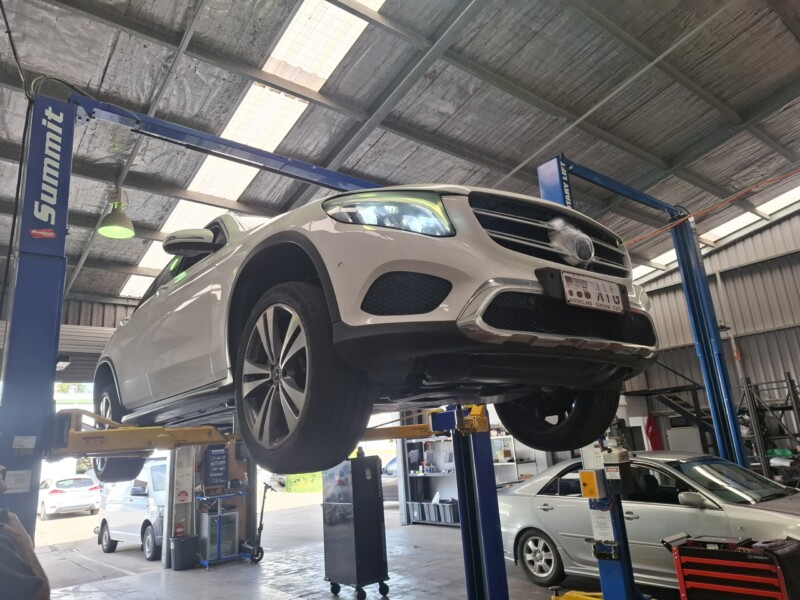
An AutoSavvy service is more than an oil and filter change. Find out how we inspect, report and prioritise the condition of your vehicle to help keep it safe and reliable.
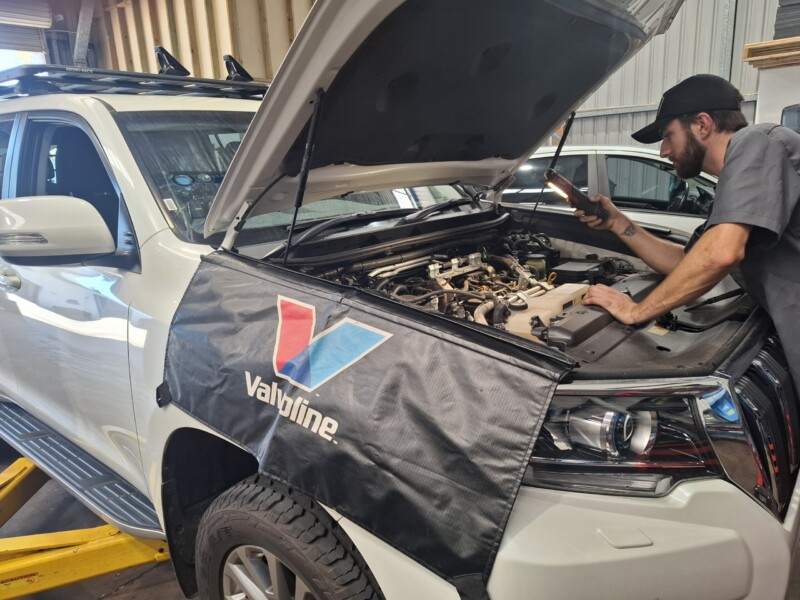
A family road trip should be about making memories — not sitting beside the highway waiting for a tow truck. Before heading away, discover the important checks that can help ensure your family car is ready for the journey.