

A logbook service Noosa drivers can rely on is about far more than an oil change and a quick look under the bonnet. It is scheduled maintenance completed to your vehicle manufacturer’s requirements, at the correct kilometre or time interval, with the right fluids, parts and checks recorded properly. Get it right and your car, 4WD, van or ute is better placed to stay reliable, safe and covered by its new-car warranty.
For local families heading between school, work and weekend sport, or tradies depending on a work ute every day, a missed service can become an expensive inconvenience. The right servicing schedule helps identify wear before it turns into a breakdown on the Bruce Highway, a failed Queensland inspection or a repair bill that could have been avoided.
What a logbook service in Noosa should include
Your vehicle’s logbook is its maintenance plan. It sets out what needs to be inspected, replaced or adjusted at each interval. Those requirements differ between makes, models, engines and driving conditions, so a proper service is never a one-size-fits-all package.
At one interval, the manufacturer may call for engine oil and filter replacement, brake inspection, fluid checks and a general safety assessment. At another, it may require spark plugs, transmission fluid, coolant, fuel filters, timing-belt checks or more detailed diagnostic work. A diesel 4WD that regularly tows a boat or travels on gravel roads may need attention in different areas from a small hatch used around Noosaville.
A qualified independent workshop should check the manufacturer schedule for your vehicle, use suitable parts and lubricants, and keep a clear service record. That gives you a practical record of what was completed, what was found and any work that may need planning for later. It also means you are not paying for vague recommendations that do not relate to your car’s actual service requirements.
Do you have to use a dealership?
No. You can generally have your vehicle serviced by a qualified independent mechanic without automatically voiding your new-car warranty. The key is that the service must be carried out in line with the manufacturer’s requirements, using appropriate parts and fluids, with reliable documentation retained.
This is where details matter. Skipping a scheduled item, using an unsuitable oil grade or failing to keep invoices can create problems if a warranty claim is needed down the track. A cheaper service is not good value if it leaves out work your vehicle was due for.
An independent workshop can provide a sensible alternative to dealership servicing, particularly when you want straightforward advice and a team that knows how you use your vehicle locally. AutoSavvy Mechanical completes manufacturer-specification servicing while explaining the work clearly, so you can make informed decisions without the pressure or uncertainty that sometimes comes with a dealership visit.
Service intervals are based on time as well as kilometres
It is easy to assume your car only needs servicing once it reaches a certain kilometre reading. In reality, most logbooks specify both a distance and time interval, such as every 10,000 kilometres or 12 months, whichever comes first.
That matters for low-kilometre vehicles. A retired couple’s car, a weekend convertible or a van used only seasonally can still need its annual service. Engine oil can deteriorate over time, seals and hoses age, brake fluid absorbs moisture and a vehicle sitting still for long periods can develop issues that are not obvious from the driver’s seat.
On the other hand, vehicles doing frequent short trips, towing, carrying heavy loads or travelling on dusty roads may need more frequent attention. If your 4WD sees plenty of beach access, unsealed roads or boat-ramp work, it is worth discussing those conditions with your mechanic. The standard logbook interval may be only the starting point.
What happens during the appointment
A good logbook service starts with the correct vehicle information – make, model, engine, build year and current kilometres. The technician can then identify the scheduled requirements rather than making assumptions based on a generic service package.
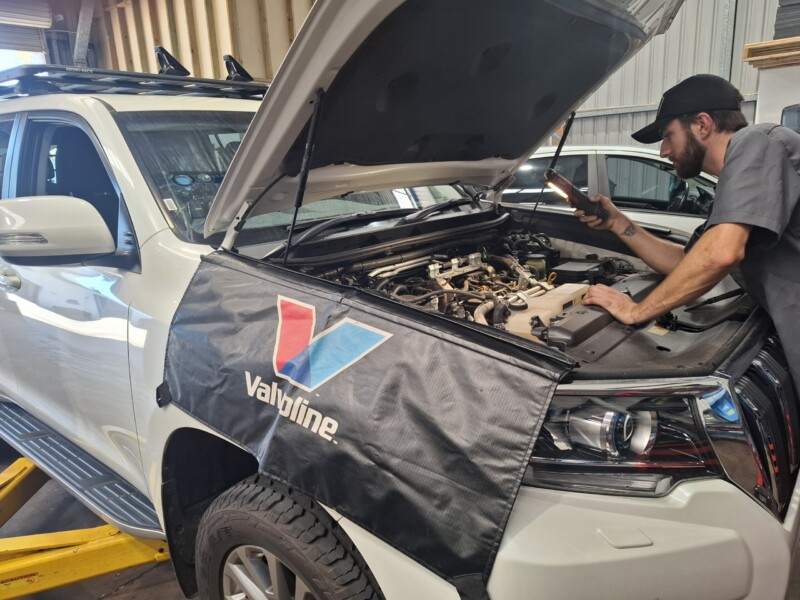
The workshop should inspect key safety and wear items, including brakes, tyres, steering, suspension, lights, wipers, battery condition and fluid levels. It should also look for oil leaks, cooling-system concerns, drivetrain issues and early signs of faults that could affect reliability. Modern vehicles may need a diagnostic scan to check for stored fault codes or service reminders.
Not every issue found during an inspection needs immediate repair. That is where transparent communication counts. Some items are urgent because they affect safety or could cause damage if left alone. Others can be monitored or scheduled before the next service. You should be told which is which, what the likely cost is and why the work is being recommended.
Avoid surprises by asking the right questions
Before booking, confirm whether the quoted price covers the full manufacturer-scheduled service for your current interval. A basic price may cover oil and filter replacement, while your vehicle could also be due for additional items such as spark plugs, a pollen filter, brake fluid or transmission servicing.
It is also sensible to ask whether the workshop will contact you before carrying out work beyond the scheduled service. Clear approval processes protect you from unexpected costs and allow you to weigh up non-urgent repairs against your budget.
Keep your invoices and service records in a safe place, even when the logbook has been stamped. Digital service histories are common on newer vehicles, but a detailed invoice remains useful when selling the vehicle, making a warranty claim or showing a prospective buyer that it has been cared for properly.
Logbook servicing for work vehicles and 4WDs
For commercial vans and work utes, servicing is directly connected to downtime. A vehicle off the road can mean missed jobs, delayed deliveries and an unhappy customer. Regular logbook maintenance helps pick up problems such as brake wear, tyre damage, battery weakness and fluid leaks before they force an unplanned day in the workshop.
4WD owners have their own considerations. Towing, beach driving, water crossings and dusty tracks can place extra strain on brakes, suspension, wheel bearings, driveline components and filters. Your mechanic should understand the difference between a vehicle used for school drop-offs and one that earns its keep or spends weekends off the bitumen.
If a repair is identified, ask whether it is related to regular wear, a maintenance item due under the logbook, or an unexpected fault. That distinction helps you understand the value of the work and plan vehicle costs with fewer surprises.
Booking a logbook service Noosa drivers can trust
Choose a workshop that treats every vehicle like it’s their own, takes the time to check the correct service schedule and gives you a clear explanation before work begins. Convenience matters too. If you rely on your vehicle for work, family commitments or getting around the Sunshine Coast, ask about booking availability and courtesy-car options when needed.
Bring your logbook if you have it, along with any recent service invoices and details of concerns you have noticed. A noise when braking, a warning light, rough starting or reduced fuel economy may be connected to maintenance, but it could also point to a separate issue worth diagnosing while the vehicle is in the workshop.
Your next service is a chance to protect the vehicle you depend on. Book it before the interval passes, keep the records, and give yourself the confidence that the job has been done properly before your next trip.
by Jeremy Bycroft
Share
Share
Leave A Comment
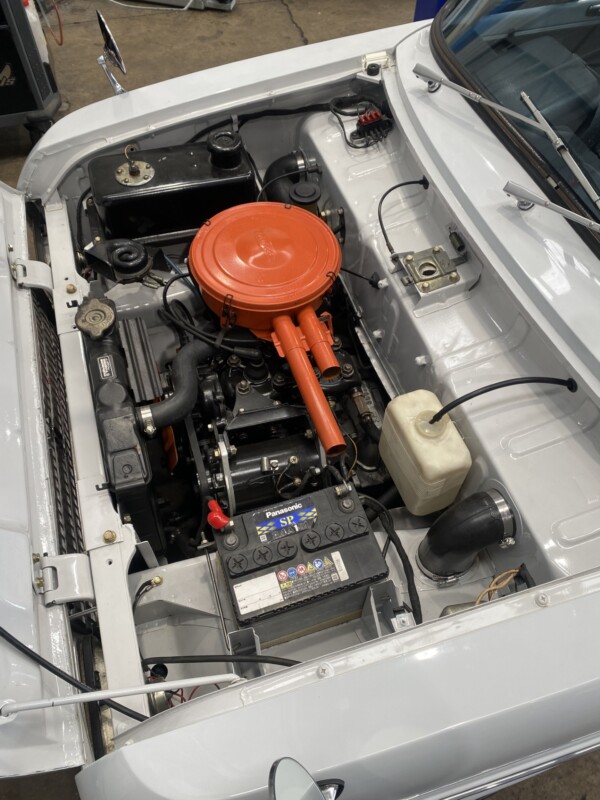
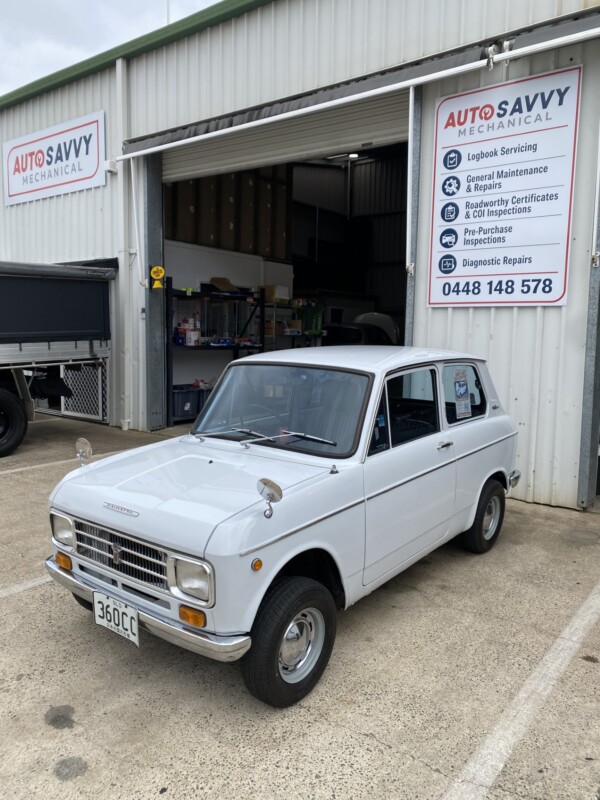
Take a step back in time with this rare 1960s Daihatsu Fellow. With its tiny 356cc two-stroke engine, four-speed manual gearbox and rear-wheel-drive layout, this remarkable little car is a wonderful example of simple engineering, careful ownership and the longevity of a well-maintained classic.
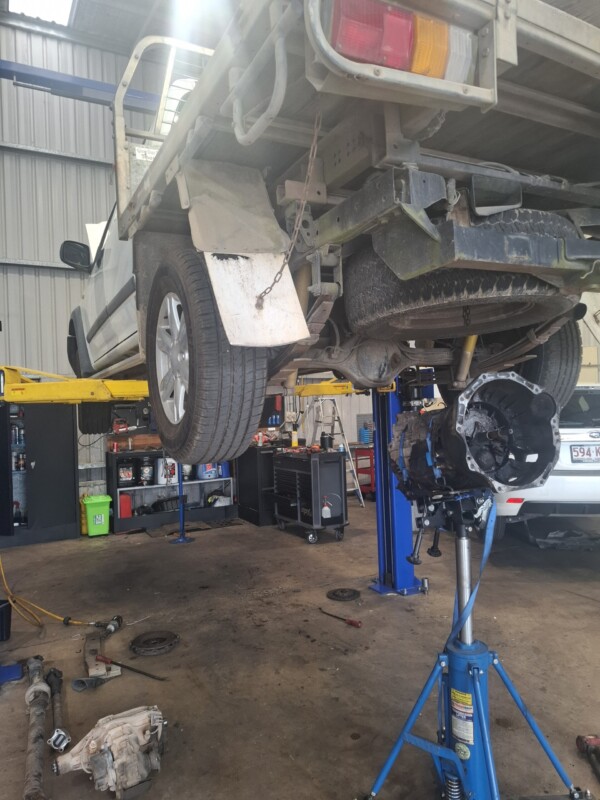
A 2010 Isuzu D-Max arrived at Autosavvy Mechanical with a failed clutch. After battling seized bolts and a bent pin, we removed the clutch, machined the flywheel and prepared the vehicle for its new clutch assembly.
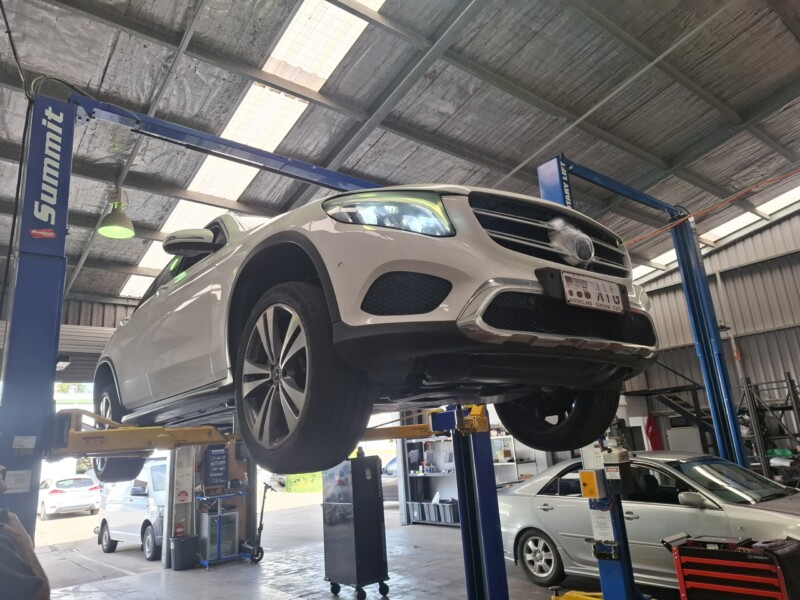
An AutoSavvy service is more than an oil and filter change. Find out how we inspect, report and prioritise the condition of your vehicle to help keep it safe and reliable.
A family road trip should be about making memories — not sitting beside the highway waiting for a tow truck. Before heading away, discover the important checks that can help ensure your family car is ready for the journey.