
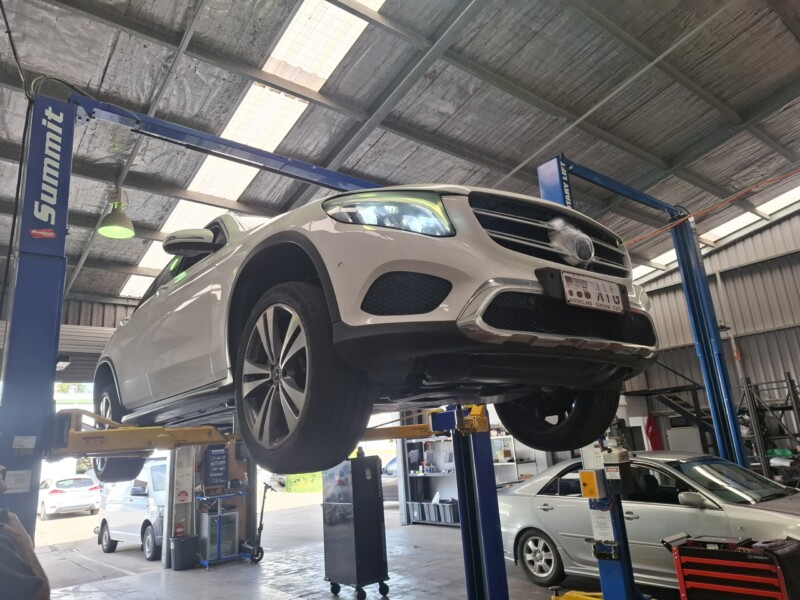
More than an oil change — it’s a detailed look at the condition of your car
When you book your car in for a regular service, what do you expect to happen?
For many motorists, the answer is probably fairly simple:
Change the oil, replace the oil filter, check a few things and hand the keys back.
At AutoSavvy Mechanical in Noosaville, we see a regular service quite differently.
While changing the engine oil and oil filter is an important part of servicing your vehicle, we believe the real value of a service comes from taking the time to inspect the vehicle properly and understanding what is happening with it.
Your car is a complex collection of mechanical, electrical and safety systems. Some components wear gradually. Some develop leaks. Some deteriorate without giving the driver any obvious warning.
That’s why an AutoSavvy service includes much more than what’s written on the invoice.
So, What Actually Happens During an AutoSavvy Service?
Every vehicle is different, and the exact requirements can vary depending on its age, make, model and service history.
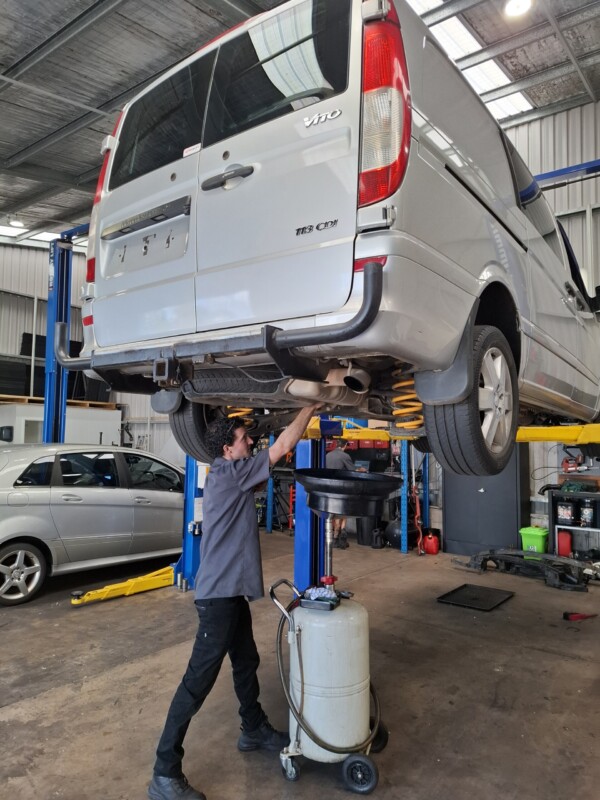
But as part of our regular servicing process, we carry out a comprehensive series of checks — including taking the vehicle onto the hoist for a detailed inspection underneath.
First, the service itself
The engine oil and oil filter are replaced using the appropriate specifications for the vehicle.
But that’s just the beginning.
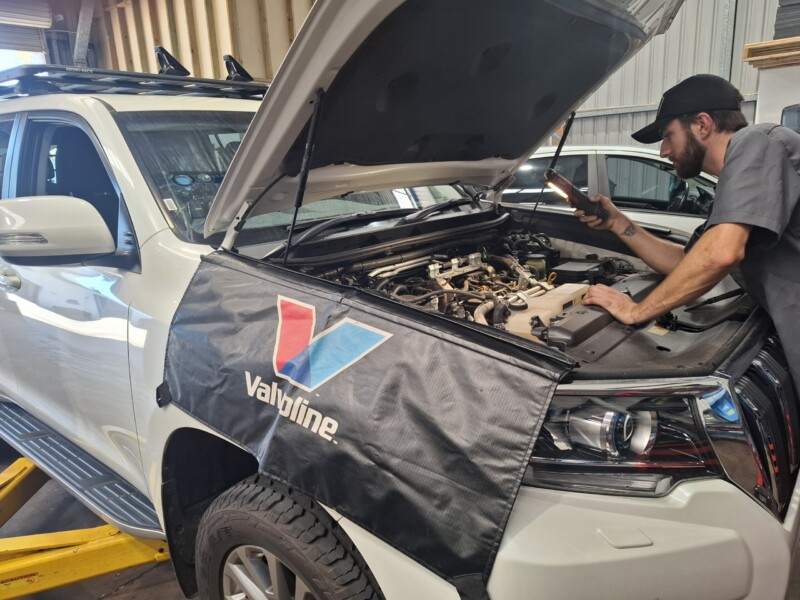
The technician also carries out a road test, paying attention to the way the vehicle drives and operates.
We’re listening for unusual noises and vibrations and looking at the overall operation of the engine and powertrain.
Sometimes a technician can learn a lot about a vehicle simply by driving it.
We Check the Things You Use Every Day
There are many relatively simple things on a vehicle that are easy to take for granted — until they stop working.
During the service, we check things such as:
- Lights
- Horn
- Windscreen washers
- Wipers
- Indicators
- Air conditioning temperature
- Park brake
- Spare tyre condition
- Tyre pressures
These might seem like small items, but collectively they contribute to the safety, comfort and usability of the vehicle.
And importantly, they give us another opportunity to identify something that may require attention.
We Check the Fluids and Components That Keep Your Vehicle Running
The technician also checks a range of important fluids and components, including:
- Transmission fluid
- Coolant
- Brake fluid
- Brake fluid moisture content
- Drive belts
- Engine air filter
- Cabin air filter
The brake fluid moisture test is particularly useful because brake fluid can absorb moisture over time.
Again, the objective isn’t simply to tick a box.
It’s about understanding the condition of the vehicle and recording anything that may need attention.
Your Battery and Charging System Get Checked Too
A vehicle’s battery and charging system can cause considerable inconvenience when something goes wrong.
That’s why the AutoSavvy service includes:
Battery load testing
along with checks of:
- Battery terminal connections
- Alternator charging output
A battery that is becoming weak may still start the car today.
Knowing that its performance is deteriorating gives the owner an opportunity to deal with the problem before the car refuses to start somewhere inconvenient.
Then We Put the Car on the Hoist
This is where we believe an important part of the AutoSavvy service really begins.
Once the vehicle is safely on the hoist, the technician has an opportunity to inspect areas that simply can’t be properly seen from above.
We check:
Tyres
Not just pressures, but their overall condition and wear.
Wheel bearings
Checking for signs of wear or other issues that could develop into a more serious problem.
Brakes
Front and rear brake pads, calipers and rotors are inspected.
Engine and transmission
The technician looks for signs of oil or other fluid leaks around the engine and transmission.
Steering
Steering linkages and associated bushes are inspected for wear or damage.
Suspension
Struts, bushes and other suspension components are checked.
Driveshafts and CV joints
Universal joints, CV joint boots and associated components are inspected.
Power steering
Where applicable, the power steering pump and associated hoses are checked for leaks.
Basically, If It’s Under the Car, We Look At It
This is probably one of the simplest ways to explain our approach.
If it’s under the car while the vehicle is on the hoist, we’ll inspect it.
We’re not suggesting that every component will require replacement.
Quite the opposite.
The purpose of the inspection is to establish what condition those components are actually in.
Some will be perfectly serviceable.
Some may be showing early signs of wear.
Others may require attention sooner rather than later.
And that’s information the vehicle owner needs to know.
What Happens When We Find Something?
This is where we believe the service becomes particularly valuable.
The technician records the findings and prepares a report for the vehicle owner.
We then explain what we’ve found and, where something needs attention, why it matters.
We don’t believe every issue needs to be repaired immediately.
Instead, items requiring attention are generally prioritised into different levels according to their importance.
For example:
Priority 1 — Needs attention now
A safety-critical or potentially damaging problem that shouldn’t be left unattended.
Severely worn brake pads would be an obvious example.
Priority 2 — Should be addressed in the near future
Something that isn’t necessarily an immediate safety issue but is deteriorating and should be planned for.
Priority 3 — Monitor and plan
A relatively minor issue that doesn’t require immediate action but should be kept on the vehicle’s service record and monitored.
A small rocker cover gasket oil leak, for example, may be something that can be monitored and scheduled rather than treated as an emergency.
This approach gives the vehicle owner clarity rather than alarm.
We Keep a Record of Your Car
One of the things we believe strongly in at AutoSavvy is keeping accurate records.
When we identify a problem, we don’t simply mention it once and forget about it.
We record the vehicle’s requirements, faults and completed repairs so that we can build a history of the car.
Think of it somewhat like having a health record for your vehicle.
Your family doctor keeps a record of your medical history so that future decisions can be made with knowledge of what has happened previously.
We believe your car deserves the same approach.
Knowing what was found at the previous service, what was repaired and what was being monitored helps us understand the vehicle’s ongoing condition.
It also helps the owner plan future maintenance.
We Understand That Repairs Don’t Always Fit the Budget
There’s another reality that we don’t ignore.
The cost of living is putting pressure on many Australian families.
We understand that discovering several items requiring attention doesn’t necessarily mean a customer can — or should — repair everything immediately.
That’s why we prioritise the work.
Where possible, we’re also prepared to look for quality parts from reputable suppliers at better prices.
Our goal isn’t simply to generate the biggest repair bill.
It’s to help the vehicle owner make sensible decisions about what needs to be done, when it needs to be done and how we can keep the cost as reasonable as possible.
If something can safely be planned for later, we’ll tell you.
If something really shouldn’t be delayed, we’ll tell you that too.
That’s What We Mean By Value
Value isn’t necessarily about finding the cheapest service.
And it isn’t about replacing the greatest number of parts.
Real value is knowing what has actually been done to your vehicle and understanding its condition when you drive it away.
A good service should give you more than fresh engine oil.
It should give you information.
It should give you a record of the vehicle’s condition.
And, ideally, it should identify developing problems before they become breakdowns or much more expensive repairs.
Our Philosophy at AutoSavvy Mechanical
At AutoSavvy, our philosophy is relatively straightforward.
We want to provide honest, skilled and knowledgeable mechanical work, while treating every vehicle as an individual vehicle rather than simply another job number.
We take the time to inspect.
We record what we find.
We explain it to the owner.
We prioritise what needs attention.
And we keep an ongoing record so that we can continue to understand the vehicle as it gets older and accumulates kilometres.
Because a car is often one of the most important and expensive things a family owns.
Keeping it maintained properly isn’t just about protecting the vehicle.
It’s about keeping the people who rely on it moving safely and reliably.
Your Next Service Should Tell You More About Your Car
So, the next time someone tells you their car is “due for a service”, it’s worth asking:
What does the service actually include?
At AutoSavvy Mechanical in Noosaville, we believe a regular service should be an opportunity to properly inspect your vehicle, identify developing issues, record its condition and help you plan its future maintenance.
Because changing the oil is important.
But knowing what else is happening underneath your car may be even more important.
AutoSavvy Mechanical — Noosaville
by Jeremy Bycroft
Share
Share
Leave A Comment
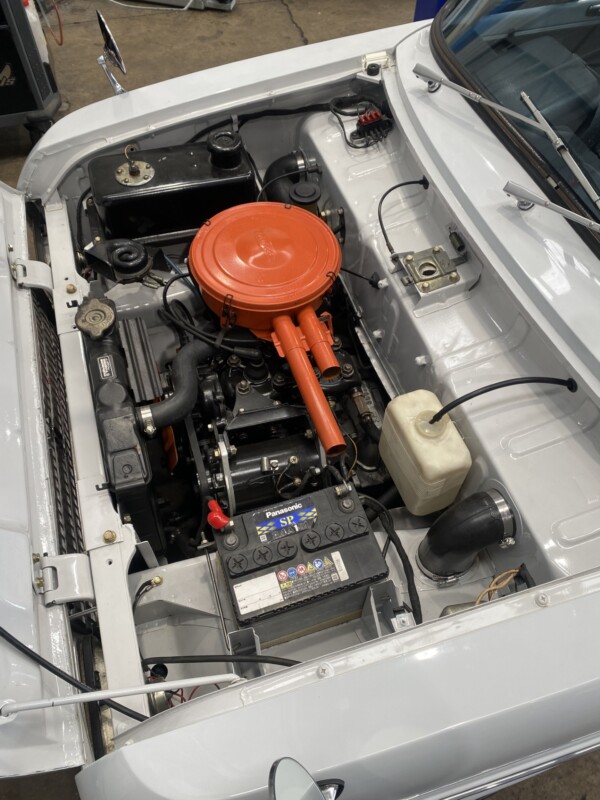
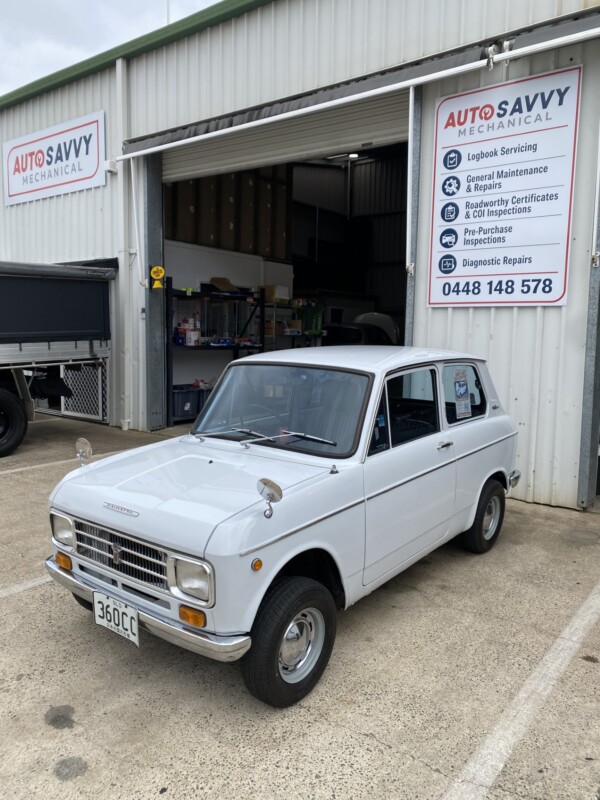
Take a step back in time with this rare 1960s Daihatsu Fellow. With its tiny 356cc two-stroke engine, four-speed manual gearbox and rear-wheel-drive layout, this remarkable little car is a wonderful example of simple engineering, careful ownership and the longevity of a well-maintained classic.
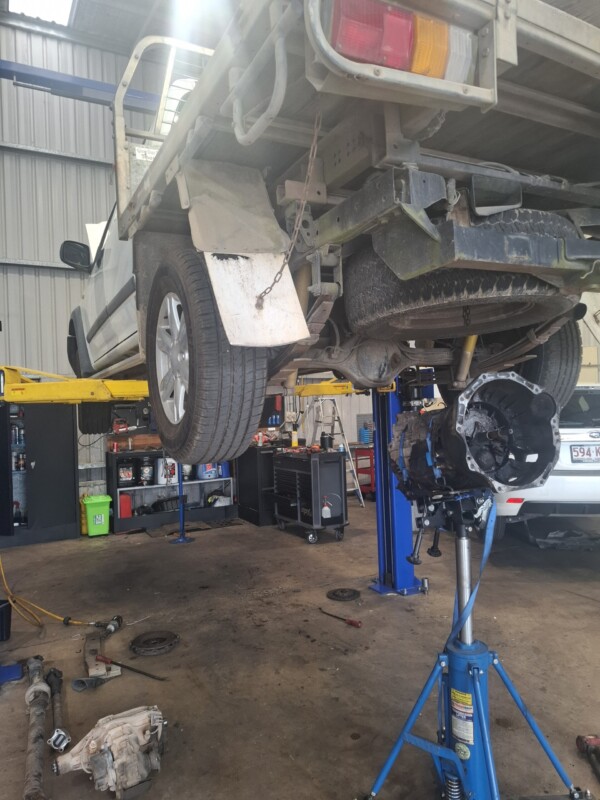
A 2010 Isuzu D-Max arrived at Autosavvy Mechanical with a failed clutch. After battling seized bolts and a bent pin, we removed the clutch, machined the flywheel and prepared the vehicle for its new clutch assembly.
A family road trip should be about making memories — not sitting beside the highway waiting for a tow truck. Before heading away, discover the important checks that can help ensure your family car is ready for the journey.
A car that is shaking or vibrating could have a problem with its tyres, brakes, steering, suspension, driveline or engine. Learn the common causes and when to get your vehicle checked.