
Buying a car is an exciting experience.
You find a vehicle you like, it looks great, it has the features you want and perhaps you’ve always wanted that particular brand.
Then you discover one that fits your budget.
But there is one question that is very easy to overlook:
Can I actually afford to own this car?
Not just the purchase price.
Not just the repayments.
Not just the fuel.
Can I afford the maintenance and repairs that come with owning this particular vehicle?
At Autosavvy Mechanical in Noosaville, we see the results of that decision every day.
Cars come into our workshop with worn components, recurring faults, expensive repairs and, occasionally, problems that leave owners wondering how a car that seemed like such a good purchase has become such a financial burden.
And that’s why we believe choosing the right car is about much more than choosing the brand you like.
The car you want isn’t always the car you need
There’s nothing wrong with wanting a particular car.
Perhaps you’ve always wanted a BMW. Maybe you love the driving experience of an Audi, the styling of a Volkswagen Golf or the features of a particular European SUV.
Perhaps you simply like the way a particular car looks.
That’s perfectly understandable.
The problem occurs when the decision is based almost entirely on the purchase price or the badge on the bonnet.
A used European vehicle can sometimes look like exceptional value compared with its original new-car price.
But the fact that you can afford to buy a car doesn’t necessarily mean you can afford to own it.
A vehicle that is inexpensive to purchase but expensive to maintain can become considerably more costly than a slightly more expensive car that is simpler, more durable and cheaper to repair.
What we see from the workshop floor
One of the advantages of working on cars every day is that you begin to see patterns.
We see which vehicles tend to come into the workshop with particular problems.
We see components that commonly wear out.
We see parts that become brittle with age.
We see vehicles where replacement components are readily available and reasonably priced.
And we see other vehicles where finding a particular component can be surprisingly difficult or expensive.
Over time, that gives a mechanic a perspective that most car buyers simply don’t have.
We’re not saying that every vehicle of a particular brand is unreliable.
Far from it.
There are excellent cars made by virtually every major manufacturer.
But there are also models and engines that can be significantly more expensive to maintain than others.
And knowing that before you buy can make a huge difference.
Not all cars are engineered for the same thing
Modern vehicles are remarkable pieces of engineering.
Manufacturers are constantly balancing performance, fuel economy, weight, emissions, handling, comfort, safety and manufacturing cost.
Sometimes those priorities mean that a component is designed for performance rather than maximum lifespan.
European vehicles are a good example.
Many European cars provide an outstanding driving experience. They can offer excellent handling, powerful engines, sophisticated transmissions and impressive technology.
But some of that engineering can come with a higher maintenance cost.
A component designed to provide exceptional performance may not necessarily last as long as a simpler component designed primarily for durability.
Brakes are a good example
Some performance-oriented vehicles use braking systems designed to provide strong braking performance and excellent pedal feel.
The trade-off can be greater wear on brake pads and rotors.
A BMW that provides superb braking performance isn’t necessarily a poorly designed car because its brake components require replacement sooner than those on a simpler vehicle.
It’s simply important for the owner to understand what they are buying.
The same principle applies to other components.
DSG transmissions
Some Volkswagen and Audi vehicles fitted with DSG transmissions can provide an excellent driving experience.
Fast gear changes and efficient operation are among their strengths.
But components such as the clutch assemblies and mechatronic systems can become expensive repair items when problems occur.
Again, this doesn’t mean that every DSG-equipped vehicle is going to fail.
It means that if you’re buying an older used vehicle with a DSG transmission, you should understand the potential maintenance and repair costs before you commit to the purchase.
Plastic components and ageing vehicles
Another issue we regularly encounter with modern vehicles is the use of plastic components in places where older vehicles may have used metal or more durable materials.
Plastic isn’t necessarily a bad material.
It is lightweight, can be precisely moulded and can reduce manufacturing costs and vehicle weight.
But heat, vibration, chemicals and years of service can take their toll.
Cooling-system components, housings, connectors and hoses can become brittle with age.
A component may have performed perfectly for many years and then suddenly crack or fail.
The problem isn’t necessarily that the manufacturer made a “bad car”.
It is that the owner of a 10- or 15-year-old vehicle may now be dealing with components that were never designed to last indefinitely.
That’s something worth considering when buying an older car.
What happens when the manufacturer no longer supplies the part?
This is an issue that many buyers never consider.
Before buying an unusual, older or less common vehicle, it is worth asking:
Can I still get the parts?
Queensland’s consumer guidance specifically recommends checking servicing costs and spare-part availability when buying a used car.
Sometimes there are excellent aftermarket alternatives.
Sometimes there aren’t.
A particular component might only be available through the manufacturer.
Another part might be available from a specialist supplier at considerable cost.
And occasionally, a vehicle can become extremely difficult to repair simply because the parts supply has dried up.
That can turn what initially looked like a bargain into a very expensive proposition.
The danger of buying the “cheap” European car
This is one of the situations we see that can be particularly upsetting.
Someone finds a European vehicle that originally cost a lot of money but is now available on the used-car market for a fraction of its original price.
They think:
“What a bargain.”
And from a purchase-price perspective, it may be.
But a $70,000 new car doesn’t necessarily become a $15,000 car to maintain simply because its market value has fallen to $15,000.
The components are still engineered to the same standard.
The brakes still cost what the brakes cost.
The transmission still contains the same components.
The electronic systems are still complex.
And specialised repairs can still be expensive.
This is where people can get caught.
The “lemon” that keeps costing money
The worst situation is when someone buys a car and then discovers that it has one problem after another.
They repair one thing.
A few weeks or months later, something else fails.
Then another problem appears.
Eventually the owner starts putting money into the vehicle simply to keep it moving.
At that point, selling it can seem like admitting defeat — but continuing to repair it can also become financially difficult.
We see how frustrating this can be for owners.
And often the person didn’t make a foolish decision.
They simply didn’t have enough information when they bought the car.
A car should suit your circumstances
The best car for you isn’t necessarily the best car for your neighbour.
Think about how you actually use your vehicle.
Do you drive mostly around town?
Do you travel long distances?
Do you tow?
Do you carry children?
Do you need seven seats?
Do you drive on dirt roads?
Do you do very high kilometres every year?
Is reliability more important to you than performance?
Are you comfortable budgeting for more expensive repairs?
Or do you need a car that is inexpensive and straightforward to maintain?
These questions are arguably more important than asking:
“What brand should I buy?”
Don’t buy the badge. Buy the right vehicle.
There is nothing wrong with owning a premium or performance vehicle if it suits your circumstances.
The problem is buying one because you like the badge without understanding the ownership costs.
Likewise, there are many vehicles that don’t have the prestige of a European luxury brand but can provide years of dependable service with relatively predictable maintenance costs.
A sensible purchase is one where the vehicle’s capabilities, reliability, running costs and maintenance requirements match what you actually need.
The cheapest car to buy isn’t necessarily the cheapest car to own.
A pre-purchase inspection can tell you much more than whether the car is roadworthy
This is where an independent pre-purchase inspection can be extremely valuable.
A Queensland safety certificate is important, but it isn’t a comprehensive mechanical inspection or a prediction of how long a vehicle’s components will last. Queensland’s Department of Transport and Main Roads specifically advises buyers that a safety certificate is not a comprehensive mechanical inspection and recommends considering an inspection by a trusted mechanic.
A proper pre-purchase inspection can look at areas such as:
- Engine condition
- Transmission operation
- Cooling system
- Brakes
- Suspension
- Steering
- Tyres
- Electrical systems
- Fluid leaks
- Warning lights
- Diagnostic faults
- Signs of previous repairs
- General mechanical condition
But there is another benefit that is sometimes overlooked.
You can talk to the mechanic about the particular vehicle you’re considering.
Ask your mechanic before you buy
If you’re looking at a particular make and model, tell your mechanic exactly what you’re considering.
Ask:
“Do you see many of these?”
“What problems do you commonly find with them?”
“Are parts readily available?”
“Are there any expensive components I should know about?”
“What sort of maintenance costs should I expect?”
“Would you buy one yourself?”
A good mechanic should be willing to give you an honest answer.
They shouldn’t simply tell you that the car is good or bad.
They should explain what they know and allow you to make an informed decision.
Sometimes the best advice is “don’t buy it”
That’s an important part of our job.
If we inspect a vehicle and find significant problems, we’ll tell you.
And if we know that the particular model you’re considering has characteristics that could make it an expensive vehicle to own, we’d rather you knew that before you handed over your money.
That doesn’t mean every car with a known weakness should be avoided.
Sometimes a particular problem has already been repaired.
Sometimes the vehicle has excellent service history.
Sometimes the purchase price reflects the potential repair costs and the buyer is comfortable with that.
The important thing is knowing what you’re getting into.
Buy for the next five years, not just the next five minutes
When buying a used car, it’s easy to concentrate on the price advertised today.
But try looking further ahead.
If you buy the car for $20,000, what will it cost you over the next three to five years?
Consider:
- Servicing
- Tyres
- Brakes
- Suspension
- Batteries
- Timing belts or chains where applicable
- Transmission maintenance
- Cooling-system components
- Electrical repairs
- Parts availability
- Insurance
- Fuel
- Registration
- Unexpected repairs
The purchase price is just the beginning.
So what cars are the most reliable?
This is where we think buyers need to be careful about online “most reliable car” lists.
There is no single perfect car for everyone.
Reliability can vary by model, engine, transmission, year, maintenance history and how the vehicle has been used.
And a car that is extremely reliable for one owner may be completely unsuitable for another.
At Autosavvy, our experience comes from seeing real vehicles in a real workshop.
We see the good ones.
We see the difficult ones.
We see cars that have been beautifully maintained and cars that have been neglected.
And we see the consequences of those choices.
That experience is valuable — but it is also why we’d rather talk about the specific car you’re considering than simply give you a blanket list of “good” and “bad” brands.
The smartest money you can spend might be before you buy
Spending money on an inspection when you haven’t even bought the car can feel unnecessary.
After all, you don’t own it yet.
But Queensland Government advice recommends an independent vehicle inspection when buying a used car, and other Australian consumer organisations similarly recommend an independent mechanical inspection before purchase.
A pre-purchase inspection may cost a few hundred dollars.
A major repair can cost thousands.
And walking away from the wrong car can be worth considerably more than either.
Talk to Autosavvy before you buy
At Autosavvy Mechanical in Noosaville, we don’t want to be the workshop you come to because you bought the wrong car.
We’d much rather help you make a good decision in the first place.
If you’re looking at buying a used vehicle, talk to us.
Tell us what you’re considering.
If we know the model well, we can tell you about the things we commonly see.
And if you decide to proceed, we can carry out a pre-purchase inspection to assess the actual vehicle you’re considering.
We’ll tell you what we find, explain what needs attention and help you understand the potential costs.
Our job isn’t to tell you what car to buy.
Our job is to help you understand what you’re buying.
Because the right car isn’t necessarily the one with the most impressive badge.
It isn’t necessarily the cheapest one.
And it certainly isn’t always the one you fell in love with when you saw it advertised.
The right car is the one that does what you need, fits your budget and doesn’t leave you constantly wondering what is going to break next.
Before you buy your next used car, talk to the people who see cars from the other side of the transaction.
Talk to Autosavvy Mechanical in Noosaville.
by Jeremy Bycroft
Share
Share
Leave A Comment
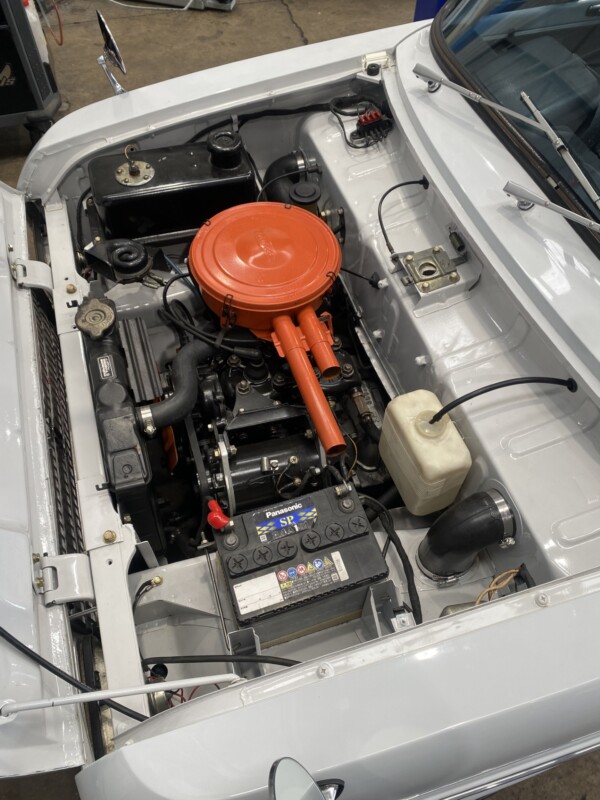
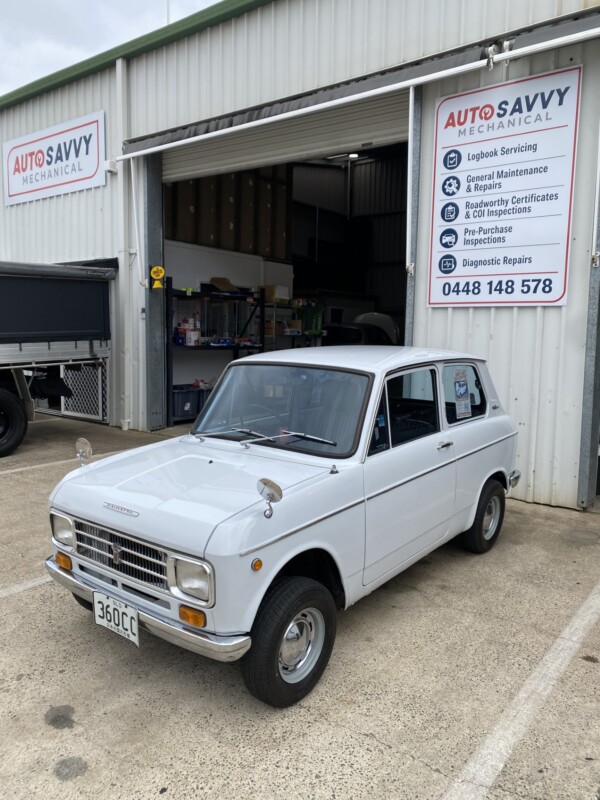
Take a step back in time with this rare 1960s Daihatsu Fellow. With its tiny 356cc two-stroke engine, four-speed manual gearbox and rear-wheel-drive layout, this remarkable little car is a wonderful example of simple engineering, careful ownership and the longevity of a well-maintained classic.
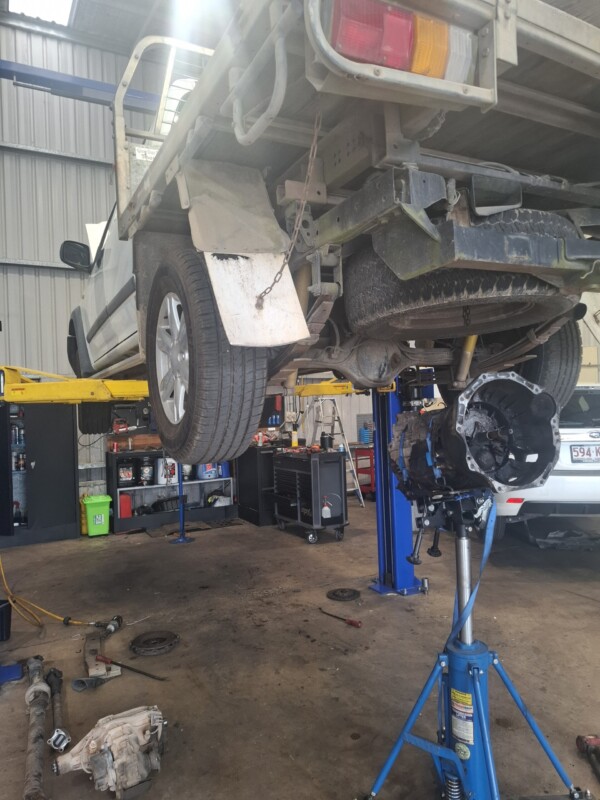
A 2010 Isuzu D-Max arrived at Autosavvy Mechanical with a failed clutch. After battling seized bolts and a bent pin, we removed the clutch, machined the flywheel and prepared the vehicle for its new clutch assembly.
An AutoSavvy service is more than an oil and filter change. Find out how we inspect, report and prioritise the condition of your vehicle to help keep it safe and reliable.
A family road trip should be about making memories — not sitting beside the highway waiting for a tow truck. Before heading away, discover the important checks that can help ensure your family car is ready for the journey.