
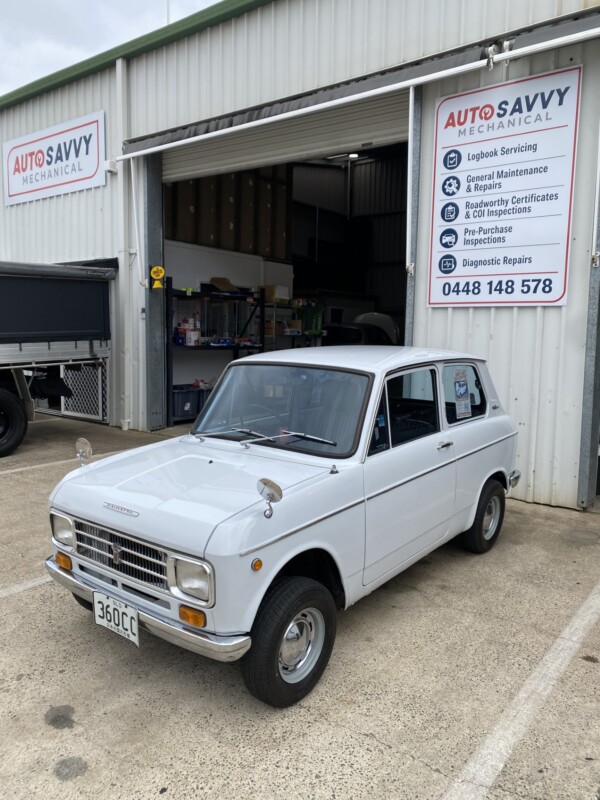
Sometimes, the simplest cars are the ones that last the longest.
At AutoSavvy Mechanical, we see vehicles of all ages and types, from modern European cars and 4WDs to everyday family vehicles. But every now and then, something particularly special comes through — a car that takes you back to a time when cars were mechanically simple, lightweight and built with a minimum of complication.
This beautiful little Daihatsu Fellow is one of those cars.
A tiny piece of Japanese automotive history
The Daihatsu Fellow was introduced in Japan in 1966 and remained in production until 1970. It was Daihatsu’s first proper kei passenger car and was also sold in export markets as the Daihatsu 360.
Unlike many of today’s cars, where the engine bay can be packed with electronics, computers, sensors and kilometres of wiring, the Fellow is wonderfully straightforward.
Under that little bonnet is a 356cc, water-cooled, two-cylinder two-stroke engine producing around 23 horsepower, driving the rear wheels through a four-speed manual gearbox.
Just 356cc — but surprisingly sophisticated
It would be easy to look at the tiny engine and assume this was little more than a basic runabout.
It wasn’t.
The Fellow featured four-wheel independent suspension, with double wishbones and coil springs at the front and independent rear suspension. It also used a box-section ladder-frame chassis. The 58 kg engine itself was the Daihatsu ZM, a water-cooled two-cylinder two-stroke. It incorporated Daihatsu’s Oil-Matic self-lubrication system, meaning the engine didn’t simply rely on the owner manually mixing two-stroke oil into every tank of petrol. The entire car weighed roughly 500kg.
This particular Fellow is a wonderful example of what can be achieved when an owner genuinely cares for an old vehicle. The engine bay is beautifully presented, and the mechanical layout is refreshingly uncomplicated.
It is believed to be the only Daihatsu Fellow of its type currently in Australia.
That’s a remarkable thought when you consider that Australian-market versions of the Fellow were offered from the mid-1960s. Contemporary catalogue information records Australian versions of the Fellow Grand Deluxe and Super Deluxe from 1966.
After more than half a century, finding an example like this in such wonderful condition is quite something.
What can a 1960s Daihatsu teach us about modern cars?
Perhaps the biggest lesson is that complexity isn’t the same thing as durability.
Modern vehicles are vastly more capable than a 1960s Daihatsu. They are safer, faster, more comfortable, more economical and packed with technology that simply didn’t exist when this little car was built. But they are also considerably more complex and after more than 50 years later, this little Daihatsu is still here.
Simple cars still deserve good maintenance
At AutoSavvy Mechanical, we work on modern vehicles every day, but cars like this are a great reminder of why regular servicing and preventative maintenance matter.
Whether you’re driving a brand-new vehicle, a 4WD that’s travelled hundreds of thousands of kilometres, or a classic that’s approaching 60 years old, the principle remains the same:
Look after your vehicle and it has a much better chance of looking after you.
by Jeremy Bycroft
Share
Share
Leave A Comment
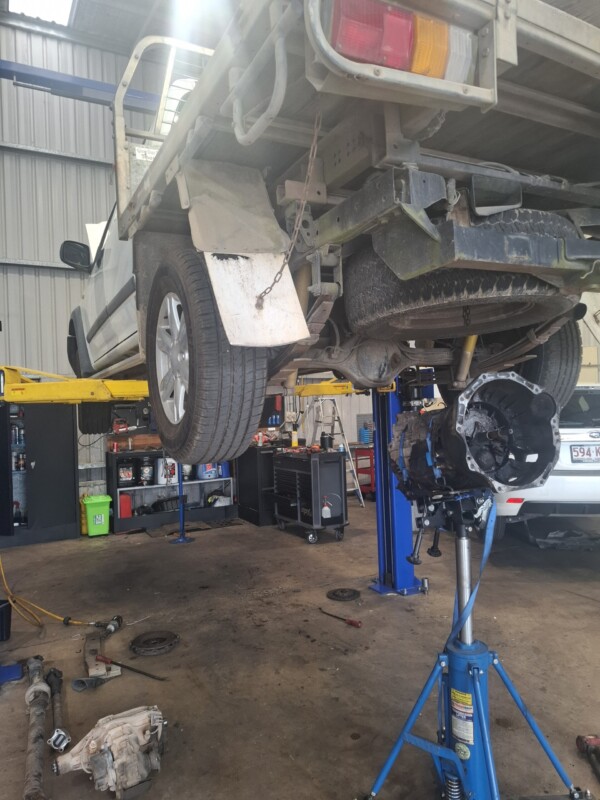
A 2010 Isuzu D-Max arrived at Autosavvy Mechanical with a failed clutch. After battling seized bolts and a bent pin, we removed the clutch, machined the flywheel and prepared the vehicle for its new clutch assembly.
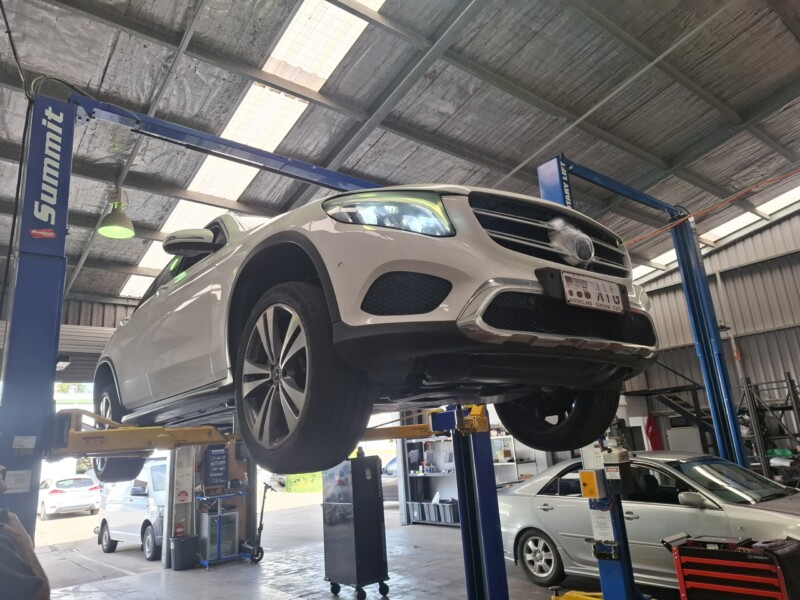
An AutoSavvy service is more than an oil and filter change. Find out how we inspect, report and prioritise the condition of your vehicle to help keep it safe and reliable.
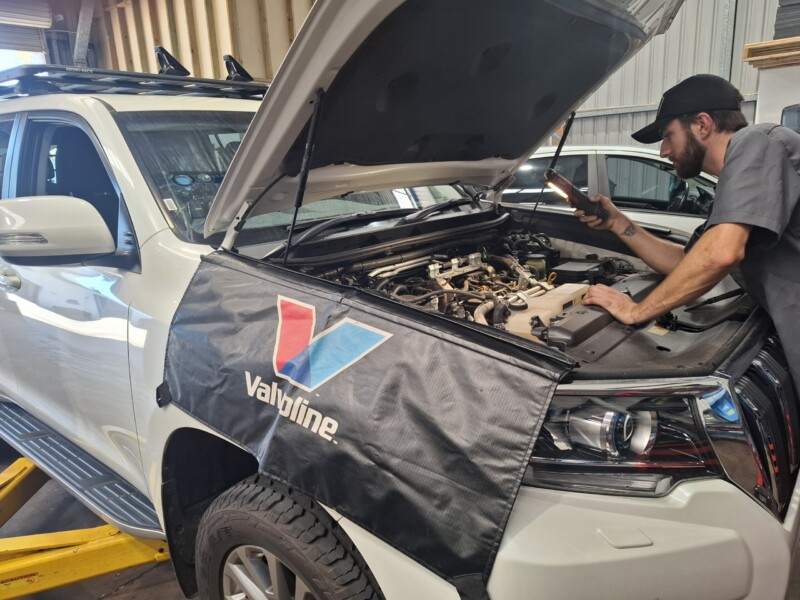
A family road trip should be about making memories — not sitting beside the highway waiting for a tow truck. Before heading away, discover the important checks that can help ensure your family car is ready for the journey.
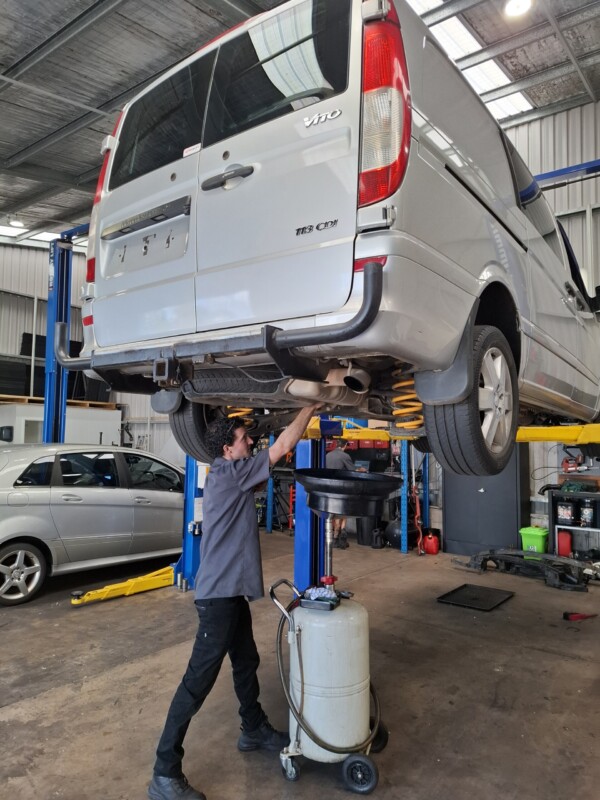
A car that is shaking or vibrating could have a problem with its tyres, brakes, steering, suspension, driveline or engine. Learn the common causes and when to get your vehicle checked.