
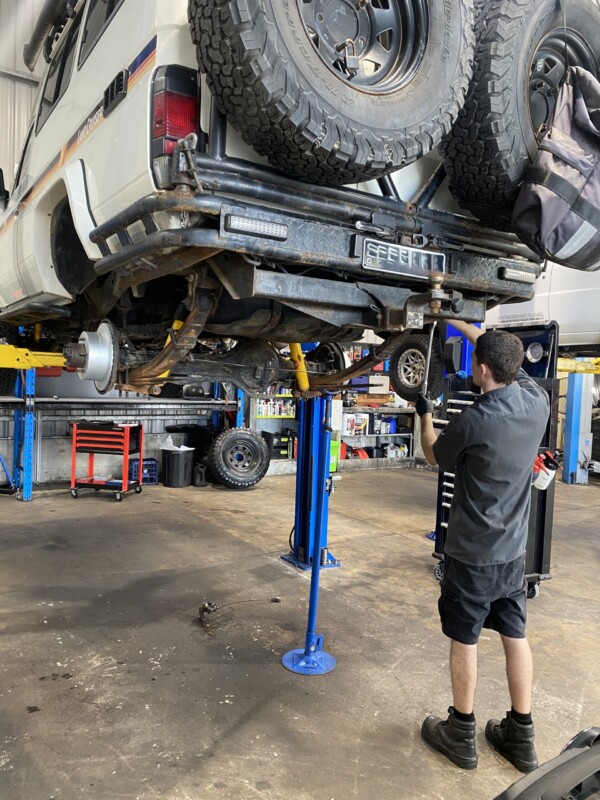
A vibration through the floor on the way to Double Island Point, a clunk when changing from reverse to drive, or a shudder while towing the boat home can all be signs of driveline wear.
For many 4WD owners around Noosa and the Sunshine Coast, these symptoms are easy to dismiss. The vehicle still drives, the noise may disappear, and there may be no warning light on the dashboard. But driveline problems rarely improve by themselves.
A regular 4WD driveline service in Noosa can help identify worn or damaged components before a relatively minor problem develops into an expensive repair.
At AutoSavvy Mechanical in Noosaville, we inspect 4WD driveline components as part of a thorough vehicle assessment, looking for wear, movement, leaks and other signs of developing problems.
Whether your 4WD spends its week doing school runs around Noosaville, working on a job site, towing a caravan or heading onto the beach at Noosa North Shore, the driveline deserves proper attention.
What is a 4WD driveline?
The driveline is the collection of components responsible for transferring the engine’s power through the transmission and ultimately to the wheels.
Depending on the vehicle, the driveline can include:
- Tailshafts and drive shafts
- Universal joints
- CV joints and CV boots
- Differentials
- Transfer cases
- Axles
- Wheel bearings
- Driveline seals
- Differential and transfer case oils
- Related mounts and fasteners
These components work together every time you accelerate, change direction or place the vehicle under load.
A problem with one component can also place additional stress on other parts. For example, excessive movement in a universal joint or tailshaft can create vibration and additional load through the driveline.
This is why a 4WD driveline inspection is about more than simply looking for a leaking differential.
What does a 4WD driveline service include?
A proper driveline inspection starts with understanding how the vehicle is used.
A 4WD that regularly tows a caravan, launches a boat, drives on sand or travels on corrugated roads can experience considerably more driveline stress than a vehicle that spends most of its life on sealed roads around Noosa and Noosaville.
During an inspection, a qualified mechanic may check for:
- Excessive movement in universal joints
- Worn or damaged CV joints
- Split or leaking CV boots
- Tailshaft wear or excessive play
- Differential leaks
- Transfer case leaks
- Damaged seals
- Loose or damaged fasteners
- Unusual noises and vibrations
- Wheel bearing play
- Condition and level of differential oil
- Condition and level of transfer case oil
- Signs of water or other contamination
Where required, differential and transfer case oils can be replaced using the correct specification for the vehicle.
The important point is that good 4WD servicing is not about replacing parts unnecessarily.
At AutoSavvy Mechanical, the objective is to find what is actually wrong, explain the problem clearly and help the vehicle owner make an informed decision about what needs to be repaired now and what can safely be monitored.
Signs your 4WD may need a driveline inspection
Driveline problems don’t always begin with a dramatic failure.
Often, the first warning is something you can feel or hear while driving.
Common symptoms include:
A clunk when changing from reverse to drive
A noticeable clunk when selecting drive or reverse can have several possible causes. Some driveline movement is normal on certain vehicles, but a new or worsening clunk deserves investigation.
It may be related to driveline backlash, universal joints, mounts or other components.
Vibration while driving
A vibration that increases with road speed can potentially come from tyres, wheels, suspension or driveline components.
A vibration that appears particularly under acceleration or when towing can provide useful clues about where the problem may be.
Correct diagnosis is important before replacing parts.
Shuddering under acceleration
A shudder under load may be associated with a tailshaft, CV joint, driveline angle, transmission component, engine or gearbox mount, among other possibilities.
This is a good example of why proper mechanical diagnosis matters.
Clicking when turning
A clicking or cracking noise during tight turns can be associated with a worn CV joint, particularly when accompanied by a damaged CV boot.
However, the noise still needs to be diagnosed rather than assuming the CV joint is automatically at fault.
Whining or humming noises
A new humming, whining or growling noise can sometimes indicate a bearing or differential problem.
The speed of the vehicle, whether the noise changes under acceleration or deceleration, and whether it changes when cornering can all help a mechanic identify the source.
Oil leaks underneath the vehicle
Oil around a differential, transfer case or other driveline component should not simply be washed away and ignored.
A leaking seal can allow the oil level to fall, reducing lubrication and potentially causing much more serious internal damage.
Beach driving can be hard on a 4WD driveline
Living around Noosa means plenty of opportunities to use a 4WD properly.
Beach driving, sand, mud and water crossings can all introduce additional stresses and contaminants that aren’t present during normal road driving.
Sand can work its way into seals and moving components, while water crossings can create the potential for water contamination of oils.
Salt water presents another concern because of its corrosive properties.
If your vehicle has been through deep water, mud or salt water, tell your mechanic when booking the vehicle in. That information can be important when assessing the condition of the driveline.
After beach driving, washing the vehicle’s underbody is worthwhile. Pay particular attention to the suspension, brakes and driveline.
Avoid directing high-pressure water directly at seals and bearings, as forcing water and contaminants into vulnerable areas can create another problem.
Towing puts additional load through the driveline
A 4WD that regularly tows a caravan, camper trailer, boat or work trailer needs maintenance that reflects how it is being used.
Towing increases the load placed on the engine, transmission and driveline, particularly during:
- Take-off
- Steep climbs
- Low-speed manoeuvring
- Reversing
- Launching boats
- Travelling over uneven surfaces
A vehicle may drive perfectly normally when unloaded but behave very differently when towing.
If you regularly tow around the Sunshine Coast, it is worth having the driveline inspected as part of your normal 4WD servicing.
A driveline check is also worthwhile before a long towing holiday. Finding a worn universal joint or leaking differential seal before leaving home is considerably better than discovering the problem hundreds of kilometres into a trip.
Differential and transfer case servicing
Differentials and transfer cases contain gears and bearings that rely on the correct lubricant for protection.
The oil can deteriorate with age and use, and water contamination can become a particular concern for vehicles that have been through deep water.
Service intervals vary between vehicles, so the manufacturer’s specifications should always be considered.
However, the way a 4WD is used is also important.
A vehicle that regularly drives through water, travels off-road or tows heavy loads may require more attention than one used exclusively for commuting.
If you’re unsure when the differential or transfer case oils were last changed, it is worth discussing it with your mechanic.
Don’t assume a driveline problem is the driveline
One of the most important parts of a good 4WD repair is accurate diagnosis.
A vibration, shudder or noise can have multiple possible causes.
For example, a vibration might be caused by:
- Tyres
- Wheel balance
- Suspension components
- Wheel bearings
- Tailshaft components
- Universal joints
- CV joints
- Driveline angles
- Engine or transmission mounts
This is why simply replacing the part that appears most likely to be responsible can become an expensive exercise.
At AutoSavvy Mechanical, we believe diagnosis should come before repair.
The vehicle may be road tested where appropriate and inspected safely on the hoist so the technician can assess the condition of related components.
If a repair is required, you should understand what has been found, why it needs attention and what the repair is expected to achieve.
Modified 4WDs need particular attention
Many Sunshine Coast 4WDs are modified for touring, towing or off-road use.
Lift kits, larger tyres, suspension modifications and other accessories can improve a vehicle’s capability, but modifications can also change driveline angles and place additional stress on components if they have not been installed or matched correctly.
If your 4WD has been modified, tell your mechanic about the changes.
A vibration or driveline problem that appears after a suspension lift, tyre change or other modification should be investigated rather than simply accepted as part of owning a modified vehicle.
How often should a 4WD have its driveline checked?
There is no single interval that suits every 4WD.
Your vehicle manufacturer’s servicing schedule is the starting point, particularly for fluid replacement requirements.
However, the way the vehicle is used should also be considered.
A 4WD that spends most of its time on sealed roads has different requirements from one that regularly:
- Drives on beaches
- Crosses creeks
- Travels off-road
- Tows a caravan
- Tows a boat
- Carries heavy loads
- Works on construction sites
- Travels on corrugated roads
A good time to request a driveline inspection is during routine servicing, before a major towing trip, after demanding off-road use, or whenever you notice a new noise, vibration or clunk.
It is also worthwhile when purchasing a used 4WD, particularly if the vehicle’s service history is incomplete.
Our pre-purchase vehicle inspections can help identify mechanical issues before you commit to buying a used vehicle.
Small problems can become expensive 4WD repairs
One of the biggest advantages of regular servicing and inspection is finding problems while they are still relatively small.
A damaged CV boot, for example, may initially be a much simpler repair than a CV joint that has been operating with dirt and contamination inside it.
Likewise, identifying a leaking differential seal early is preferable to discovering that the differential has been running with insufficient oil.
A worn universal joint may initially produce a small clunk or vibration. If it is allowed to deteriorate further, the consequences can be considerably more serious.
This is why paying attention to changes in the way your 4WD feels is important.
You don’t need to know exactly what the problem is. That’s the mechanic’s job.
Why choose AutoSavvy Mechanical for 4WD servicing in Noosaville?
At AutoSavvy Mechanical, we believe a vehicle inspection should be thorough, not rushed.
When your 4WD is on the hoist, there is an opportunity to inspect areas that are difficult or impossible to see during normal driving.
We look at the vehicle as a complete system rather than simply concentrating on the symptom that brought it into the workshop.
Our approach is straightforward:
Find the problem. Explain the problem. Fix what needs fixing. Don’t sell you work you don’t need.
Whether you drive a 4WD for family transport, work, towing, touring or beach adventures, we can help you keep it maintained and ready for the job.
Book your 4WD driveline service in Noosaville
If your 4WD has developed a clunk, vibration, shudder, clicking noise, humming noise or oil leak, don’t wait for it to become a breakdown.
And if you’re planning a beach trip, towing holiday or long-distance 4WD adventure, a driveline inspection can provide some valuable peace of mind before you leave.
Call AutoSavvy Mechanical in Noosaville today to book your 4WD in for a service or driveline inspection.
We’ll inspect the vehicle, explain what we find and give you straightforward advice about what needs attention.
AutoSavvy Mechanical – your local mechanic in Noosaville for 4WD servicing, vehicle repairs, diagnostics and maintenance.
by Jeremy Bycroft
Share
Share
Leave A Comment
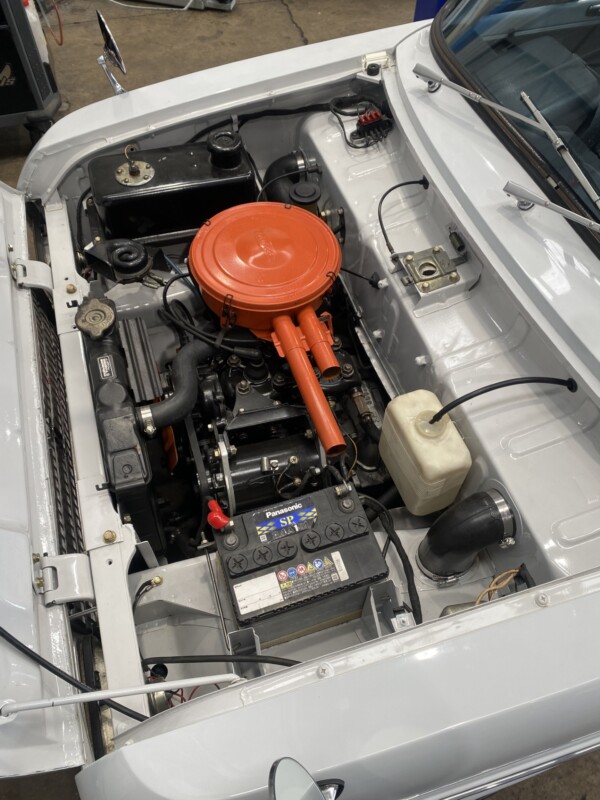
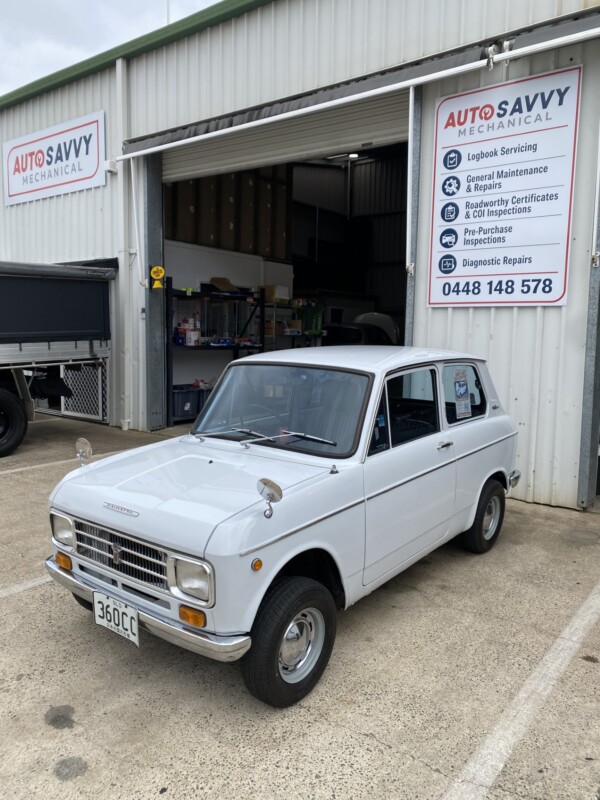
Take a step back in time with this rare 1960s Daihatsu Fellow. With its tiny 356cc two-stroke engine, four-speed manual gearbox and rear-wheel-drive layout, this remarkable little car is a wonderful example of simple engineering, careful ownership and the longevity of a well-maintained classic.
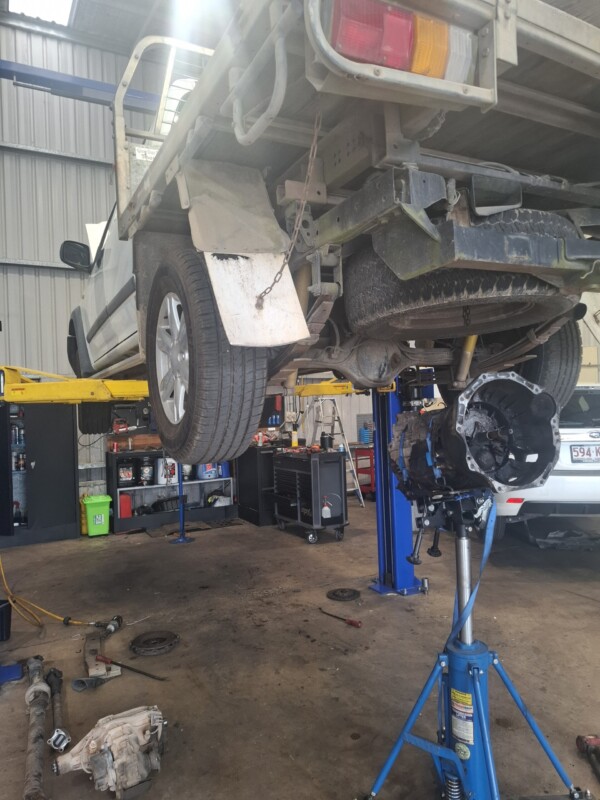
A 2010 Isuzu D-Max arrived at Autosavvy Mechanical with a failed clutch. After battling seized bolts and a bent pin, we removed the clutch, machined the flywheel and prepared the vehicle for its new clutch assembly.
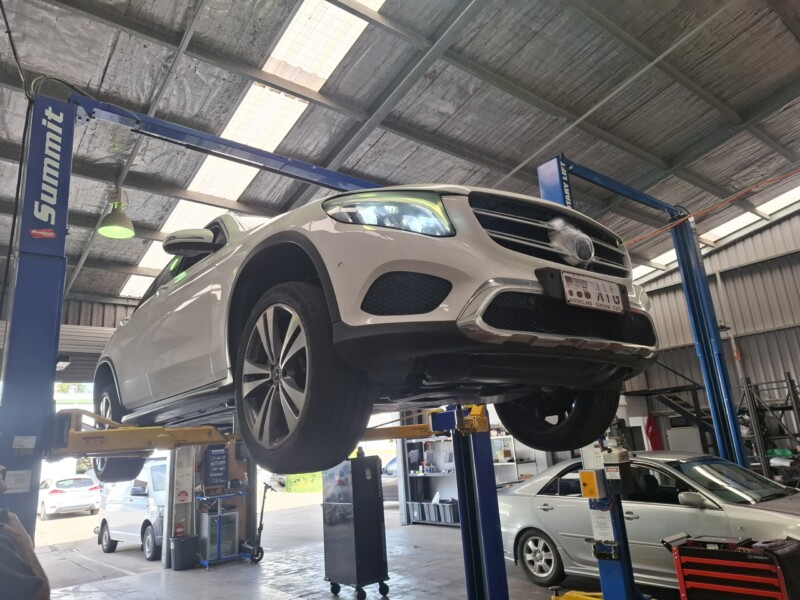
An AutoSavvy service is more than an oil and filter change. Find out how we inspect, report and prioritise the condition of your vehicle to help keep it safe and reliable.
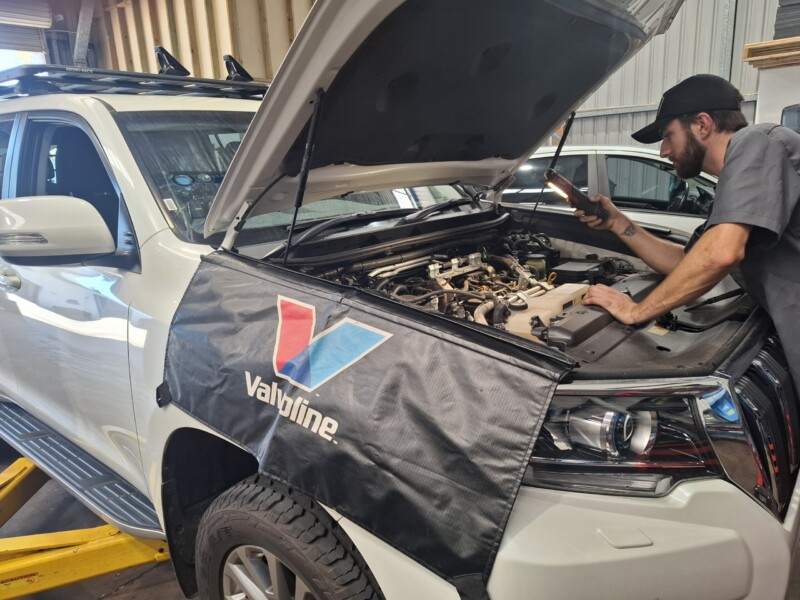
A family road trip should be about making memories — not sitting beside the highway waiting for a tow truck. Before heading away, discover the important checks that can help ensure your family car is ready for the journey.